AI coding agents generating massive PRs

The Ironies of AI Coding: Combating Cognitive Debt with Visual PRs

With the advent of AI coding agents, multi-thousand-line Pull Requests are becoming the new normal. The models are churning out massive amounts of code, and keeping up is getting exponentially harder. Because I don’t have a granular understanding of every single line being merged, I’m finding it increasingly difficult to generate accurate mental models of the system’s new features. For humans, mental models are everything. We need context and an adequate knowledge of the system to reason about new architecture, confidently add features, or know exactly where to look when a production bug inevitably surfaces. ...

June 30, 2026 Â· 6 min Â· Suraj Deshmukh
Agent writing YAML vs. Code

Will AI Agents be the Death of YAML?

Stop Making Agents Write YAML At @Scale: Systems and Reliability this year, Pulumi’s Joe Duffy put a name to a problem a lot of us have been quietly routing around for years. He called it the “agentic infrastructure gap.” The setup is familiar. Andrej Karpathy has compared getting an app into production to assembling IKEA furniture: cloud consoles, API keys, configuration copied from somewhere, and a fair amount of duct tape holding it together. AI has accelerated application coding so dramatically that the bottleneck has completely shifted; writing the app is fast, but getting it running is the new hurdle. And the part that matters is that almost none of that deployment process lives anywhere an LLM can actually reason about. ...

June 29, 2026 Â· 3 min Â· Suraj Deshmukh
OpenClaw with Azure AI Foundry

Setting Up OpenClaw with Azure AI Foundry

Introduction OpenClaw is a self-hosted gateway that connects your favorite chat apps — Telegram, WhatsApp, Discord, iMessage, and more — to AI coding agents. It runs locally on your machine, keeping your data under your control while giving you the flexibility to interact with AI assistants from anywhere. In this post, we’ll walk through how to configure OpenClaw to use a model deployed on Azure AI Foundry as its backend. ...

February 22, 2026 Â· 7 min Â· Suraj Deshmukh
Deploying Kimi K2.5 on Azure

Deploying Kimi K2.5 on Azure: A Complete Guide to Running MoonshotAI's Model

Kimi K2.5 is MoonshotAI’s latest powerhouse, offering sophisticated reasoning capabilities and a massive context window. Now that it’s integrated into Azure AI Foundry, enterprise users can deploy it with the same security and scalability as the GPT family. Beyond its raw specs, Kimi K2.5 is exciting because it has established itself as one of the premier OSS models for agentic workflows, proving to be a strong performer with frameworks like OpenClaw. In this guide, we’ll bypass the portal and use the Azure CLI to stand up a production-ready Kimi K2.5 instance. ...

February 9, 2026 Â· 4 min Â· Suraj Deshmukh
Using Claude Code with GitHub Models

Using Claude Code with GitHub-Hosted Anthropic Models

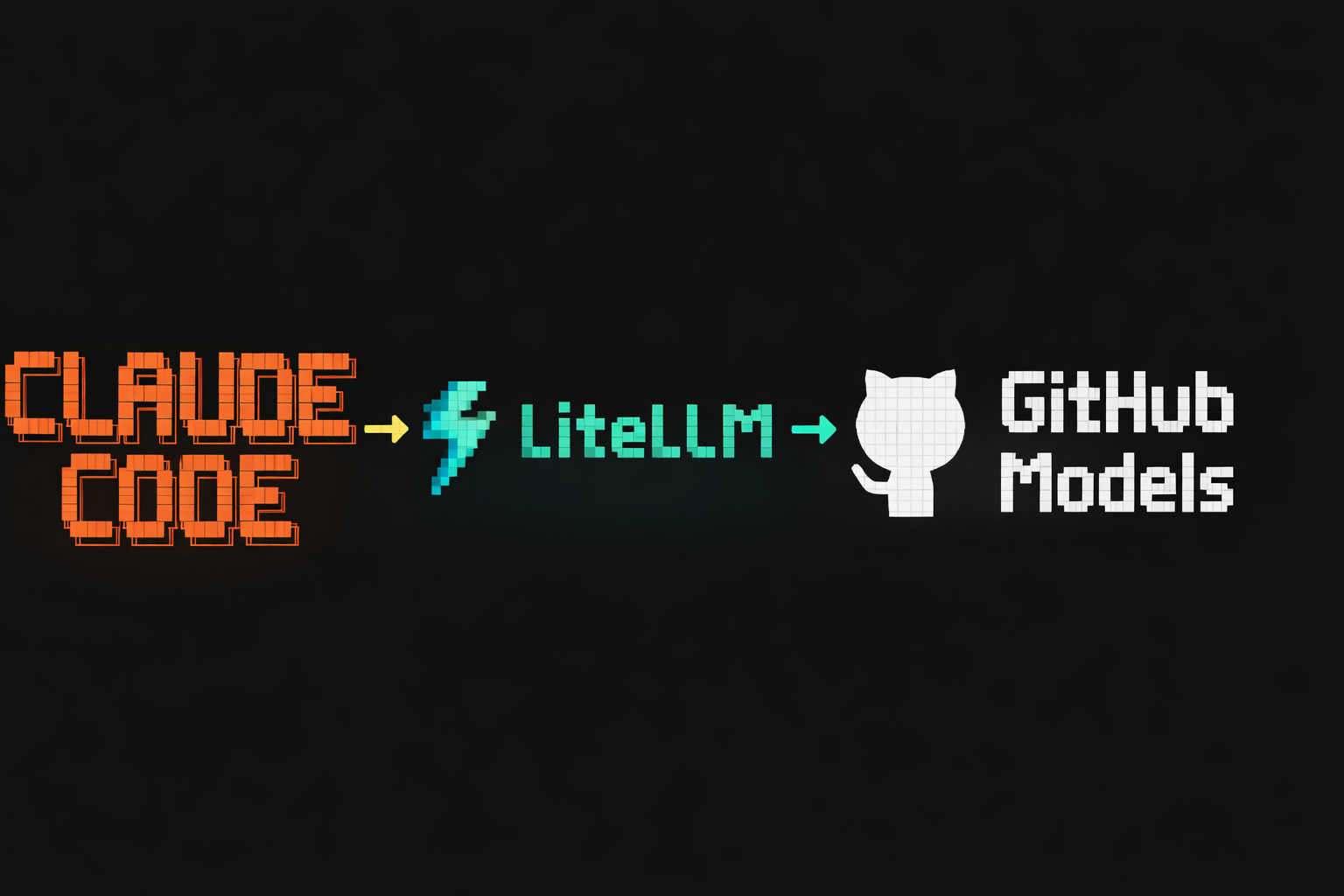
Introduction Claude Code is an incredible AI-powered coding assistant that runs in your terminal. While it typically connects to Anthropic’s API, did you know you can use it with GitHub Hosted Anthropic Models instead? This is particularly useful if you have access to GitHub’s AI model. In this post, I’ll show you how to proxy Claude Code requests to GitHub-hosted Anthropic models using litellm, an open-source proxy server that translates between different LLM API formats. ...

January 31, 2026 Â· 4 min Â· Suraj Deshmukh
LLM CLI tool using GitHub Copilot Models

Using LLMs to write meaningful commit messages from CLI

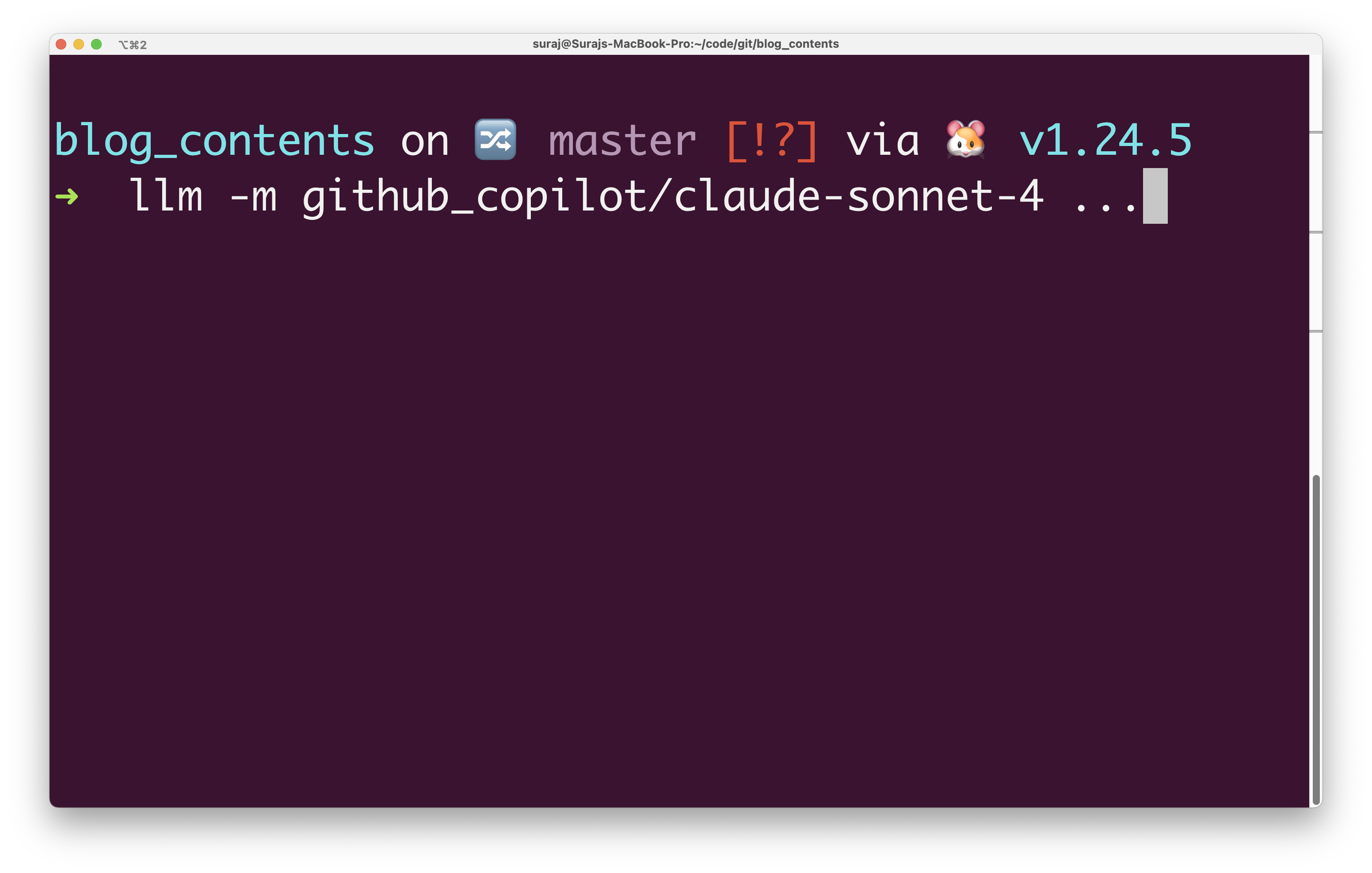
Let’s face it, writing commit messages is tedious work. I’ve been using LLMs to write my commit messages for a while now. But until now, I used to copy the diffs manually and paste it into some chat window and ask the LLM to write a commit message. I’ve been trying various CLI tools viz. OpenAI’s Codex CLI, Google’s Gemini CLI, etc. But codex lacks piping support and Gemini CLI cannot be used with internal codebases! I can use GitHub Copilot extension in VS Code with internal codebases, but I wanted a CLI tool that I can use in my terminal. GitHub Copilot is now free for all GitHub users, so this is useful for everyone. ...

July 17, 2025 Â· 3 min Â· Suraj Deshmukh
Grok-3™️ deployment on Azure AI Foundry

Deploying Grok-3 on Azure: A Complete Guide to Running xAI's Latest Model

Grok-3 is xAI’s latest language model that offers advanced reasoning capabilities and conversational AI features. With the release of Grok-3, xAI’s latest and most powerful language model, on Azure AI Foundry every Azure user now has access to the model. In this guide, I’ll walk you through the complete process of deploying Grok-3 on Azure, from setting up the infrastructure to making your first API calls. Prerequisites Before we begin, make sure you have: ...

June 24, 2025 Â· 3 min Â· Suraj Deshmukh
TTS on Azure

Deploying OpenAI Text-to-Speech (TTS) Model on Azure: A Step-by-Step Guide

Deploying OpenAI Text-to-Speech (TTS) Model on Azure: A Step-by-Step Guide Azure Cognitive Services provides a straightforward way to deploy OpenAI models, including powerful text-to-speech capabilities. In this guide, I’ll demonstrate how to deploy a text-to-speech model using Azure CLI commands. Prerequisites An Azure subscription Azure CLI installed and logged in (az login) Step 1: Define Environment Variables Set your environment variables to simplify and standardize deployments. export AZURE_RESOURCE_GROUP="example-rg" export AZURE_REGION="eastus" export OPENAI_NAME="example-openai" export AZURE_SUBSCRIPTION_ID="your-subscription-id" # Keep these variables as is. export AUDIO_MODEL="gpt-4o-mini-tts" export AUDIO_MODEL_VERSION="2025-03-20" Explanation: ...

May 31, 2025 Â· 3 min Â· Suraj Deshmukh